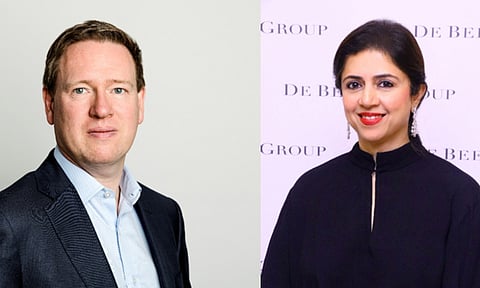

India is rapidly reshaping the global natural diamond landscape, emerging as one of De Beers Group’s most critical growth markets. Speaking at a media interaction in Mumbai, De Beers Group CEO Al Cook and Forevermark CEO and De Beers Global SVP Shweta Harit outlined why India now sits at the heart of the group’s long-term strategy.
India has climbed to become the world’s second-largest consumer market for natural diamonds, overtaking China and trailing only the United States. According to Cook, 2025 marked the fourth year in a row that India recorded double-digit growth in natural diamond demand, with early estimates indicating an 11% year-on-year rise. This sustained momentum signals a fundamental shift in global consumption patterns.
Cook attributed this growth to India’s resilient economic environment, consistent GDP expansion of 6–7%, and a rapidly expanding affluent middle class. In a world marked by geopolitical uncertainty, he described India as a stable and reliable market, making it increasingly influential within the global diamond ecosystem.
“India is no longer just the place where diamonds are crafted for the world,” Cook said. “It is now a place where diamonds are being bought with pride by Indian consumers.”
De Beers’ confidence in the Indian market is evident across its investments, spanning education, manufacturing, technology, marketing and retail. The De Beers Institute of Diamonds in Surat has been operational for over a decade, strengthening industry standards in cutting, polishing and grading while reinforcing India’s role in the global diamond value chain.
On the retail front, De Beers is accelerating the growth of Forevermark in India. Four standalone Forevermark stores are already operational, with a fifth opening in Mumbai this week. Once launched, it will be Forevermark’s largest store worldwide, underlining the brand’s commitment to deepening its connection with Indian consumers.
Harit explained that India was chosen as Forevermark’s test market for standalone stores due to strong brand awareness, favourable economic conditions and years of consumer insight gained through shop-in-shop formats. Early results, she noted, show strong traction among premium, self-purchasing customers. There has also been a noticeable shift towards white gold jewellery and larger carat sizes, reflecting evolving, globally influenced tastes.
Addressing the growing conversation around lab-grown diamonds, Cook pointed to a clear distinction forming in India between natural and lab-grown offerings. Pricing and awareness have played a key role in this separation, with natural diamonds continuing to command significantly higher value and emotional relevance.
Harit added that while lab-grown diamonds are finding space as fashion jewellery, natural diamonds remain the most aspirational category, especially for weddings and milestone moments, where symbolism and legacy matter most.
Cook also highlighted tightening supply dynamics, noting that global diamond production has been on a decline since its 2008 peak, with further reductions expected as several large mines near the end of their life cycles.
From a governance perspective, De Beers welcomed India’s recent initiatives, including clarity from the Bureau of Indian Standards on diamond terminology and India’s leadership role as chair of the Kimberley Process. Both developments, Cook said, are critical for strengthening consumer trust and reinforcing ethical sourcing.
Looking ahead, De Beers is bullish on India’s long-term potential. Cook revealed that the group expects natural diamond demand in India to double between 2024 and 2030, driven largely by Gen Z and younger consumers seeking jewellery that expresses individuality, emotion and enduring value.
While China remains a market of interest over the longer term, Cook made it clear that India is currently De Beers’ most dynamic and strategically important growth market, shaping its global consumer strategy in the years ahead.
