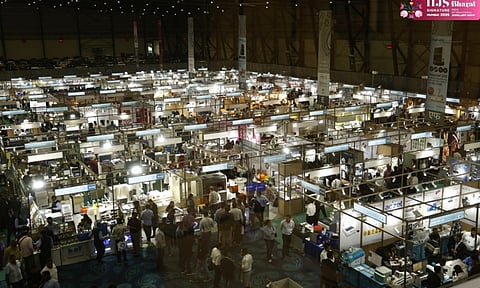

IIJS Bharat – Signature 2026 concluded in Mumbai with strong momentum, reaffirming India’s leadership in the global gems and jewellery ecosystem. Organised by the Gem & Jewellery Export Promotion Council (GJEPC), the 18th edition set the tone for 2026 as the first major B2B trade show of the year, with industry estimates pointing to nearly ₹75,000 crore in business expected over the next three months.
The show witnessed significant domestic participation, drawing over 25,000 trade buyers from more than 800 cities across India—an indicator of sustained demand across regional and metro markets alike. Its international footprint also continued to expand, with 1,400 buyers from 40 countries and 12 overseas delegations attending the event, underlining global confidence in Indian-manufactured gold, diamond, silver and lab-grown jewellery.
The inauguration took place across both Mumbai venues. The opening ceremony at the Jio World Convention Centre on 8 January featured Ms. Sandrine Conseiller, CEO, De Beers Brands and Chair, Natural Diamond Council, as Chief Guest, along with Ms. Harsha Bangari, Managing Director, EXIM Bank, and Mr. Saumen Bhaumik, Managing Director, CaratLane, as Guests of Honour. The ceremonial opening at the Bombay Exhibition Centre on 9 January was attended by Mr. Neeraj Agarwal, Ambassador-Designate of India to Mauritania, and Mr. Arun Narayan, CEO – Jewellery Division, Tanishq, alongside GJEPC’s leadership.
Reflecting on the show’s outcome, Shri Kirit Bhansali, Chairman, GJEPC, said the edition sent a positive signal for the year ahead. He noted that the projected ₹75,000 crore in business highlighted the industry’s scale and resilience, adding that consistent demand across categories supports India’s long-term goal of achieving USD 100 billion in gem and jewellery exports by 2047.
Ms. Sandrine Conseiller described India as central to the future of jewellery, citing its historic role in the diamond story and its emergence as one of the fastest-growing markets globally. She emphasised that platforms such as IIJS Signature strengthen trust, collaboration and long-term confidence across the industry.
From a financial and infrastructure perspective, EXIM Bank MD Harsha Bangari highlighted the importance of improved awareness of financial products, technology adoption, skill development and smoother trade processes to unlock export potential across jewellery clusters.
Saumen Bhaumik of CaratLane underscored the growing need to invest in artisans and skill-building as the industry scales. He stressed that safeguarding craftsmanship is not just a social responsibility, but a strategic business imperative.
Speaking at the BEC opening, Ambassador-Designate Neeraj Agarwal reiterated the Government of India’s support for the sector, particularly in expanding exports, strengthening trade agreements and opening new markets. He also encouraged Indian companies to explore opportunities in gold-rich regions such as West Africa.
Arun Narayan of Tanishq described IIJS Bharat Signature as a vital convergence point for the industry—where learning, dialogue and commerce intersect—highlighting the depth and longevity of India’s jewellery heritage.
Among the key initiatives unveiled at the show was JewelStart, a new GJEPC programme aimed at mentoring startups and nurturing emerging entrepreneurs to build a future-ready jewellery ecosystem. The Crafts Pavilion also drew strong interest, facilitating direct engagement between buyers, designers and National Award-winning artisans, and opening discussions around integrating traditional techniques into modern collections.
Running alongside the jewellery exhibition, IGJME Bharat – Signature 2026 showcased advanced machinery, technology and manufacturing solutions, offering a comprehensive view of innovations shaping jewellery production and creating a seamless end-to-end sourcing platform.
In terms of market insights, exhibitors noted strong demand for jewellery priced below ₹5 lakh, with a clear consumer shift towards minimal, timeless designs. Fancy-cut diamonds, coloured stones and organic gems—particularly pearls—stood out, while tanzanite emerged as a preferred alternative to blue sapphire due to its accessibility and visual appeal.
Rising gold prices also influenced design and manufacturing strategies. Several brands reported success with weight optimisation through technology, increased adoption of 18-karat gold, and growing use of 3D manufacturing—even in bridal jewellery—achieving significant reductions in metal weight.
As IIJS Bharat – Signature 2026 drew to a close, it reinforced India’s role as a global jewellery hub, combining scale, craftsmanship, innovation and market adaptability—setting a strong foundation for growth in the year ahead.
