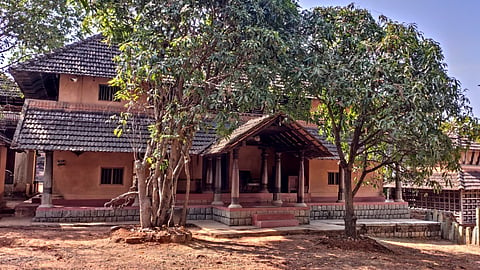


Across the Indian subcontinent, heritage architecture is steadily losing ground to the twin forces of urbanisation and real-estate greed. From Bengal's crumbling zamindar mansions and Rajasthan's neglected havelis to Maharashtra's endangered wadas, Goa's fading Indo-Portuguese manor houses and the traditional Guthu Manes of coastal Karnataka, India's architectural inheritance is steadily losing ground to the forces of urbanisation, redevelopment and real-estate speculation.
Yet the loss extends beyond architecture. Every demolished wada, abandoned haveli or neglected ancestral home represents the disappearance of traditional craftsmanship, regional identity and generations of accumulated knowledge.
The jewellery industry faces a remarkably similar challenge. Across India, master artisans are retiring without successors, regional jewellery traditions are fading, and highly specialised techniques are becoming increasingly difficult to sustain in a market driven by speed, scale and standardisation. Whether in architecture or jewellery, the question remains the same: how do we preserve skills that cannot be mass-produced?
Where Architecture and Jewellery Meet
It is this intersection between craft preservation and cultural stewardship that underpins Abaran Timeless Jewellery's support of Hastashilpa Heritage Village through the Abaran Foundation, the philanthropic arm of the Bengaluru-based jewellery house. The foundation supports initiatives spanning education, healthcare, community welfare, arts and heritage conservation, reflecting the company's commitment to preserving legacies beyond the jewellery business.
Located in Manipal, Hastashilpa Heritage Village is one of India's most significant architectural conservation projects. Founded by conservationist Vijaynath Shenoy, the village has rescued and reconstructed heritage homes from across coastal Karnataka, preserving architectural traditions that might otherwise have been lost to neglect or redevelopment.
The process of conservation bears a striking resemblance to jewellery making. Every carved beam, ornate bracket and handcrafted detail must be catalogued, understood and restored with precision and respect for the original craft. Much like a master goldsmith recreating an heirloom jewel, the conservator's task is not merely technical—it is cultural.
For Pratap Kamath, Managing Director of Abaran Timeless Jewellery, the initiative also carries personal significance. "Hastashilpa Heritage Village is located in Udupi, where Abaran was founded by my grandfather, Sri. Sadanand Kamath," says Kamath. "We were drawn to the work being done to preserve heritage homes that may otherwise have disappeared as younger generations moved away from these properties,in search of greener pastures."
Preserving Skills for the Next Generation
Kamath believes the challenges facing heritage architecture and jewellery craftsmanship are fundamentally similar. "Traditional jewellery-making, like heritage architecture, depends on artisanal expertise that cannot easily be replicated through mass production," he explains. "Both face similar challenges as younger generations pursue different careers and lifestyles."
His observation speaks to a broader concern within the luxury sector. Whether restoring a centuries-old structure or crafting a handcrafted jewel, both disciplines rely on knowledge passed from one generation to the next. Once lost, these skills are difficult—if not impossible—to recover.
At the same time, consumers are increasingly seeking authenticity, provenance and cultural meaning in the brands they support. Heritage preservation, therefore, is becoming more than a philanthropic exercise; it is an extension of a brand's values.
"Younger consumers want to engage with brands that stand for something meaningful and contribute to preserving cultural value," Kamath notes. For the jewellery industry, initiatives such as Hastashilpa Heritage Village offer a timely reminder that heritage is not confined to products alone. It also resides in the ecosystems of craft, culture and knowledge that make those artisanal goods possible.
As India's architectural heritage and jewellery traditions confront similar pressures, preserving one may ultimately help safeguard the other.