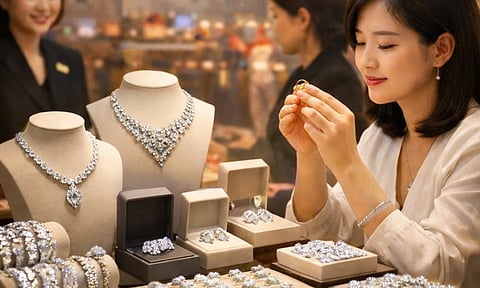
China’s luxury sector is still navigating a slowdown, but jewellery is proving to be one of its most stable categories, according to a new Bain & Company assessment of 2025 trends.
While the mainland personal luxury goods market declined by roughly 3–5% during the year, jewellery experienced only a marginal dip of up to 5%. This marks a significant improvement from the steep double-digit drop seen in the previous year, placing jewellery among the strongest performers across luxury segments.
The category’s resilience has been driven by evolving consumer behaviour. Shoppers, increasingly cautious about discretionary spending, are gravitating toward products perceived as lasting investments. Jewellery — associated with intrinsic value, craftsmanship, and longevity — has benefited from this shift in priorities, maintaining demand even as other luxury purchases slowed.
Another important factor has been the localisation of spending. Around two-thirds of luxury purchases were made within mainland China as international shopping declined. Narrower price differences between domestic and overseas markets, combined with softer travel activity, redirected consumers toward local boutiques and retail counters, supporting jewellery sales in particular.
Performance across other luxury categories remained uneven. Beauty products registered modest growth, watches continued to face pressure, and the second-hand luxury market expanded strongly. However, resale activity within jewellery remained comparatively limited.
Bain characterises 2025 as a transition year for China’s luxury industry — a period of adjustment rather than contraction. Within this environment, jewellery has emerged as an early indicator of stabilisation, suggesting a more balanced outlook for the market as it moves into 2026.
